Times Square after Ian. Every business on the gulf was wiped out.“Mobile homes, boats, washing machines, parts of roofs and walls and dining room sets were scattered through miles of mangrove

Dated: June 1 2019
Views: 412
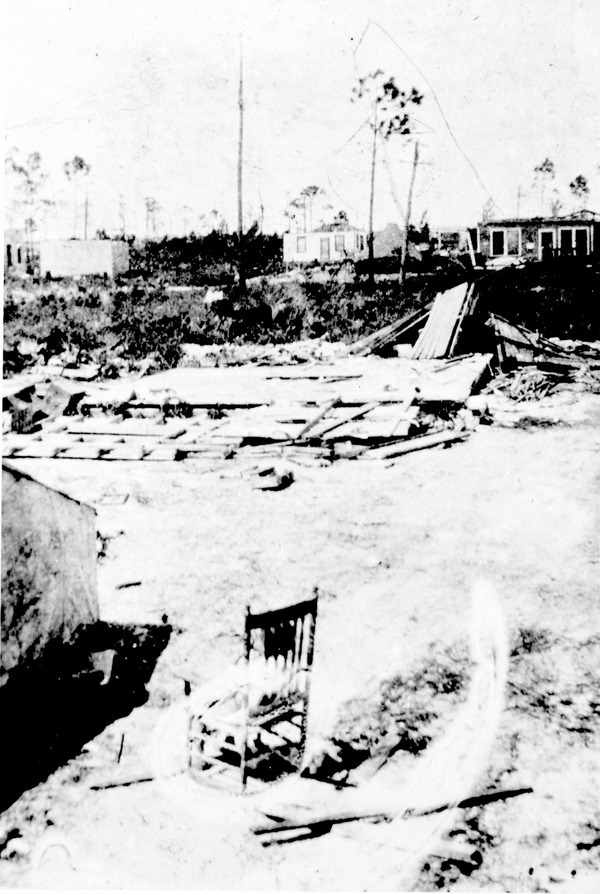
In honor of hurricane season, I thought I would research and write about some of the most destructive hurricanes to hit our area over the past centuries beginning with the Hurricane of 1921.
On October 17, 1921, a trough developed in the western Caribbean developing into a tropical storm on October 20. The storm moved slowly to the northwest due to a high pressure system over Bermuda.
By October 22, the storm had intensified into a Category 1 hurricane. As the storm moved over the northwestern Caribbean, it became a Category 2 hurricane on October 23. Six hours later, the hurricane was a category 3, reaching category 4 intensity a few hours later. By October 24, the hurricane had moved across the Yucatan Channel entering the Gulf of Mexico.
The storm finally made landfall near Tarpon Springs as a cat 3 hurricane. The storm passed to the west of the Florida Keys as a cat 4 causing tropical storm force winds and high tides.
Captiva and Sanibel were completely covered with water. In Punta Rassa, most of the homes were damaged extensively or washed away. Highways leading out of Fort Myers were covered with water.
On FMB many buildings suffered damage including the casinos, cottages, and Crescent Beach Resort. The storm also destroyed the mausoleum of Dr. Cyrus Teed, founder of the Koreshan Unity. Teed’s tomb was destroyed and his remains were washed into the sea (more about Teed in another post).
Damage in Lee County was estimated at $1.5 million. The storm washed away a railroad bridge near Boca Grande, destroyed two bridges over Charlotte Harbor, and filled the streets of Punta Gorda with a 7 foot storm surge. The entire island of Egmont Key was covered with water forcing 75 residents to seek shelter in the lighthouse.
Sanibel was a farming community back in the early days. The warm temperatures and good topsoil made it easy for settlers to grow vegetables and citrus in their gardens. Crops included tomatoes, peppers, eggplant, squash, cucumbers, and watermelon. After the storm, many farmers on the island sold their land since the soil had been covered with salt water. More than 330 acres were sold to Clarance Chadwick who transformed them into South Seas Resort.

Bob has been a Realtor with Tri Power for over 20 years. Recently, their daughter Angie joined the team as a realtor assistant. Bob has witnessed first-hand the tremendous change and growth that has t....
Times Square after Ian. Every business on the gulf was wiped out.“Mobile homes, boats, washing machines, parts of roofs and walls and dining room sets were scattered through miles of mangrove
For the past few weeks, volunteers have been busy painting street signs to help people navigate on the island. Very few of the “Approved” signs survived the storm, so this was a
Although Beach Elementary is still standing, the damage to the buildings and the classrooms appears to be extensive. The school, for many years, was the center for community gatherings.
In the 1920s, San Carlos Island was part of the mainland. To get to the Beach from town, you had to take McGregor to John Morris Road in Iona. When you reached Bunche Beach, you took a
 All information regarding a property for sale, rental or financing, school information and public tax records is from sources deemed reliable; PROVIDED, HOWEVER, that representations and warranties are not made about the accuracy thereof, and such information is subject to errors, omissions, updates, modifications, changes of price, rent rates, commissions, prior sales, leases or financing, changes in school boundaries, or withdrawal without notice. All information displayed on this Website should
be independently verified if any person intends to engage in a transaction based upon such information.
Show More...
All information regarding a property for sale, rental or financing, school information and public tax records is from sources deemed reliable; PROVIDED, HOWEVER, that representations and warranties are not made about the accuracy thereof, and such information is subject to errors, omissions, updates, modifications, changes of price, rent rates, commissions, prior sales, leases or financing, changes in school boundaries, or withdrawal without notice. All information displayed on this Website should
be independently verified if any person intends to engage in a transaction based upon such information.
Show More...
 © 2026 Florida Gulf Coast MLS (FGCMLS) Information deemed reliable, but not guaranteed. The IDX data relating to real estate for sale on this web site comes in part from the Florida Gulf Coast Multiple Listing Service. The information being provided is for consumers' personal, non-commercial use and may not be used for any purpose other than to identify prospective properties consumers may be interested in purchasing. Information is deemed reliable but not guaranteed.
 This data is up-to-date as of September 23, 2026 9:25 PM UTC Some properties that appear for sale on this website may subsequently have sold and may no longer be available. For the most current information, contact CENTURY 21 TriPower Realty, Inc..
The information provided is for consumers' personal, non-commercial use and may not be used for any other purpose. The data relating to real estate for sale on this website comes in part from the Broker Reciprocity Program (BR Program) of M.L.S. of
Naples, Inc., Florida Gulf Coast MLS, Marco Multi-List, Inc., My Florida Regional MLS, or Miami Association of Realtors. Properties listed with brokerage firms other than CENTURY 21 TriPower Realty, Inc. are marked with the BR Program Icon or the BR House Icon and detailed information about them includes the name of the listing brokers. The properties displayed may not be all the properties available through the BR Program. The data provided by the Broker Reciprocity Program, and the Information is Deemed Reliable But Not Guaranteed. The source of the information about real property available for sale or rent is the copyrighted and proprietary database of the M.L.S. of Naples, Inc., Florida Gulf Coast MLS, Marco Multi-List, Inc., My Florida Regional MLS, or Miami Association of Realtors. Copyright 2026 M.L.S. of Naples, Inc., Florida Gulf Coast MLS, Marco Multi-List, Inc., My Florida Regional MLS, Miami Association of Realtors.; all rights reserved.
Show More...
This data is up-to-date as of September 23, 2026 9:25 PM UTC Some properties that appear for sale on this website may subsequently have sold and may no longer be available. For the most current information, contact CENTURY 21 TriPower Realty, Inc..
The information provided is for consumers' personal, non-commercial use and may not be used for any other purpose. The data relating to real estate for sale on this website comes in part from the Broker Reciprocity Program (BR Program) of M.L.S. of
Naples, Inc., Florida Gulf Coast MLS, Marco Multi-List, Inc., My Florida Regional MLS, or Miami Association of Realtors. Properties listed with brokerage firms other than CENTURY 21 TriPower Realty, Inc. are marked with the BR Program Icon or the BR House Icon and detailed information about them includes the name of the listing brokers. The properties displayed may not be all the properties available through the BR Program. The data provided by the Broker Reciprocity Program, and the Information is Deemed Reliable But Not Guaranteed. The source of the information about real property available for sale or rent is the copyrighted and proprietary database of the M.L.S. of Naples, Inc., Florida Gulf Coast MLS, Marco Multi-List, Inc., My Florida Regional MLS, or Miami Association of Realtors. Copyright 2026 M.L.S. of Naples, Inc., Florida Gulf Coast MLS, Marco Multi-List, Inc., My Florida Regional MLS, Miami Association of Realtors.; all rights reserved.
Show More...
